
Emotional needs affect learning every day.
They show up in shutdowns, escalations, refusals, and long recovery times after stress. Many students identified under Emotional Disturbance are capable academically. The barrier is regulation, not ability.
When that happens, the IEP must do more than describe behavior. It must define the skill, establish a numeric baseline, and show measurable growth over time.
Clear emotional disturbance IEP goals ensure schools are measuring regulation growth in a defensible and consistent way. Without structure, teams rely on impressions. And impressions do not protect districts.
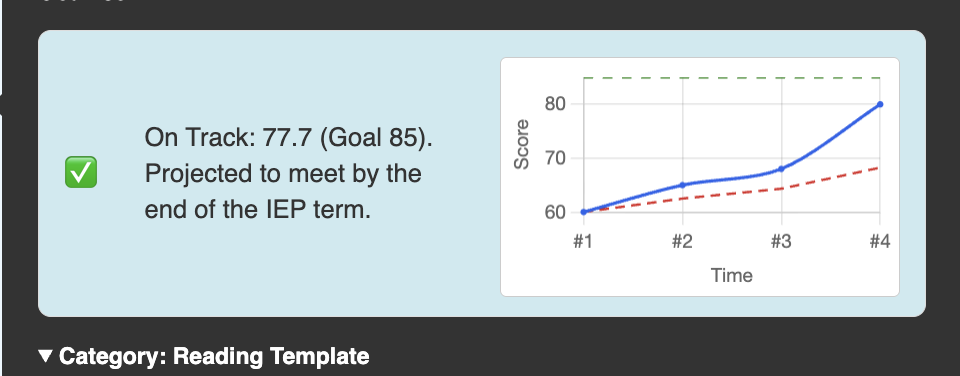
What Emotional Disturbance Means in Schools
Under IDEA, Emotional Disturbance refers to conditions that adversely affect educational performance over time. The federal definition is available through the U.S. Department of Education.
In practice, this often includes:
- Difficulty managing emotions during instruction
- Anxiety that interrupts academic tasks
- Escalation during transitions
- Withdrawal or avoidance
- Aggressive or disruptive responses to stress
Eligibility is not the goal.
Improvement in educational functioning is the goal.
That is why emotional disturbance IEP goals must clearly define what skill is being improved.
What Skill Are We Actually Targeting?
Many IEPs say:
- “Student will improve self-regulation.”
- “Student will demonstrate coping skills.”
- “Student will reduce disruptive behavior.”
These are outcomes, not measurable skills.
A defensible goal defines observable actions. For example:
- Accurately describing emotions when prompted
- Using positive self-talk during stress
- Choosing and implementing a coping plan
- Returning to task within a defined timeframe
Here is a structured example.
Example: Self-Regulation Goal with Behavior Data
Description:
In all academic settings and when faced with stressful circumstances or work demands, Kevin will utilize positive self-talk and coping strategies by accurately describing how he is feeling and choosing a plan to implement in order to move forward. Progress will be measured by earning and maintaining at least 85% of his behavior points related to the “Learning Self-Regulation” (L) category of the ABLE daily behavior data collection sheet for 11 out of 12 consecutive weeks (minimum of 4 days per week).
Baseline: 71%
Goal: 85%
This example shows what strong emotional disturbance IEP goals look like. The skill is defined. The baseline is numeric. The data source is consistent. The duration requirement is clear.
What Does a 71% Baseline Really Mean?
Baseline data tells us where the student starts.
If Kevin earns 71% of possible self-regulation behavior points, that means he is losing nearly 29% of available points during academic periods.
In practical terms, that may mean:
- He escalates before using a coping strategy.
- He requires adult prompts to regain regulation.
- He loses instructional time during emotional episodes.
Without a numeric baseline, teams cannot show growth. If you need a deeper review of baseline clarity, see How to Write a Baseline That Actually Works.
Baseline data protects teachers because it shows documented starting performance, not assumptions.
What Does 85% Represent in Practice?
Moving from 71% to 85% is meaningful progress.
If there are 100 possible regulation points per week:
- Baseline average = 71 points
- Target mastery = 85 points
That means reducing lost regulation moments by nearly half.
It reflects:
- Increased independent coping strategy use
- Faster recovery after stress
- More consistent classroom participation
The goal also requires 11 out of 12 consecutive weeks at or above 85%. This prevents short-term improvement from being mistaken for sustained growth.
In What Does an 80% Speech Intelligibility Goal Really Mean?, we explained how percentages must translate into observable performance. The same applies here. Percentages only matter when they represent consistent, clearly defined opportunities.
How Should Progress Be Monitored?
Progress monitoring for emotional disturbance must be structured and consistent.
1. Define Scoring Clearly
All staff must agree on:
- What earns a regulation point
- What results in a deduction
- What counts as an opportunity
Inconsistent scoring weakens defensibility. This is addressed in When Different Adults Collect IEP Data, Consistency Matters More Than You Think.
2. Monitor Weekly
Emotional growth is rarely linear. Weekly review allows teams to:
- Adjust supports
- Identify triggers
- Modify reinforcement strategies
If progress is only reviewed quarterly, intervention delays increase risk.
For a structured approach, see Progress Monitoring That Protects Teachers: A Simple Weekly System.
3. Review Trends, Not Single Weeks
One strong week does not indicate mastery.
If Kevin reaches 85% for two weeks but then drops back to 72%, the trend matters. Emotional disturbance IEP goals should include sustained performance requirements to demonstrate stability.
Trend review is central to strong progress monitoring for emotional disturbance.
What If Progress Stalls?
If Kevin remains near 71% for several weeks, the IEP team should ask:
- Are coping strategies explicitly taught and practiced?
- Are classroom supports consistent?
- Is reinforcement aligned to the target behavior?
- Is the behavior plan being implemented with fidelity?
Clear data leads to clear decisions.
Without data, adjustments appear subjective. Subjectivity increases dispute risk.
Why This Matters for School Leaders
Emotional disturbance cases often involve heightened parent concern and legal sensitivity.
School leaders should review:
- Are emotional disturbance IEP goals measurable?
- Is baseline data numeric and documented?
- Is data collection consistent across adults?
- Is weekly review occurring?
- Are trends documented?
When emotional disturbance IEP goals lack numeric baselines or structured monitoring, districts assume unnecessary compliance risk.
A baseline of 71% with a defined path to 85%, sustained over consecutive weeks, shows:
- Clear expectations
- Documented growth targets
- Consistent monitoring
- Evidence of instructional response
That level of structure strengthens defensibility and builds trust with families.
A Practical Reflection
Students with emotional needs deserve support grounded in clarity.
When we define the skill, measure baseline honestly, and monitor weekly progress toward a realistic target, growth becomes visible.
Emotional disturbance IEP goals should not rely on impressions.
They should rely on structure.
Clear structure supports students, protects teachers, and reduces district risk.
Frequently Asked Questions
What makes emotional disturbance IEP goals compliant?
Emotional disturbance IEP goals are compliant when they define observable skills, include numeric baseline data, and specify measurable growth targets. Clear documentation supports defensibility.
How should baseline data be collected for self-regulation goals?
Baseline data should be collected using consistent observation periods and clear scoring definitions. Percentage of behavior points, frequency of escalation, or duration of recovery are appropriate measures.
How often should emotional disturbance progress be reviewed?
Progress should be reviewed weekly or at consistent intervals tied to the data collection system. Regular review supports timely intervention adjustments and compliance with IDEA requirements.