
School leaders are responsible for something that is often invisible until it becomes a problem: IEP data. On paper, progress monitoring looks simple. In practice, it is scattered across classrooms, spreadsheets, notebooks, and individual systems that do not connect.
This creates real risk. When data is inconsistent or incomplete, schools struggle to show whether students are making meaningful progress. During audits, complaints, or due process, that gap becomes a serious issue.
This is where IEP progress monitoring software becomes important. Not as a convenience, but as a system that brings structure, consistency, and defensibility to how schools track student progress.
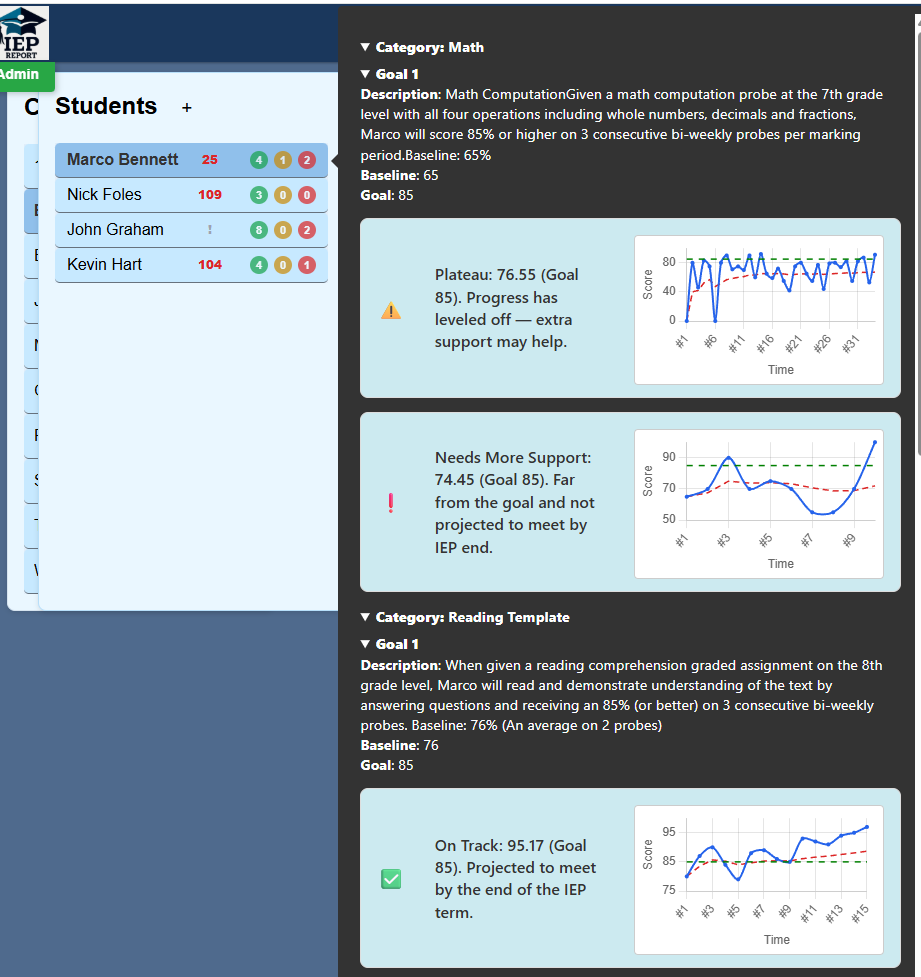
What IEP Progress Monitoring Software Solves
In most schools, progress monitoring depends on individual teacher systems. Some teachers use spreadsheets. Others use paper. Some collect data weekly. Others collect it inconsistently.
This creates three problems:
- Data is not consistent across classrooms
- Data is difficult to access quickly
- Data cannot be easily defended
An IEP progress monitoring software system standardizes how data is collected and stored. It ensures that every student’s progress is tracked in a structured way, regardless of who is collecting the data.
This is similar to what we describe in What good IEP progress monitoring looks like, where consistency across teams is one of the most important indicators of a strong system.
What “Baseline” Means in a System Like This
Every IEP goal starts with a baseline. But in many districts, baselines are either unclear or not connected to ongoing data.
A strong system connects baseline data directly to progress monitoring. That means:
- The starting point is clearly defined
- Data collection aligns with the goal
- Progress can be measured against a known reference point
Without that connection, it becomes difficult to show growth over time.
If your team struggles with this, it often starts at the baseline level. You can see common issues in How to write a baseline that actually works, where unclear baselines lead to unclear progress.
What the Data Actually Means in Practice
One of the biggest misunderstandings in special education is what percentages and data points actually represent.
For example:
- A student shows 80% accuracy on a task
- Another student shows 60% accuracy but improving
Without context, those numbers do not tell the full story.
An IEP data tracking system organizes data so teams can see:
- Trends over time
- Rate of improvement
- Consistency across sessions
For example:
- Student A: 80%, 78%, 82%, 79% (stable but not improving)
- Student B: 50%, 60%, 65%, 70% (clear growth trend)
A strong system makes these patterns visible, not buried in separate documents.
How Progress Should Be Monitored
Progress monitoring should not depend on memory or informal routines. It should be scheduled, consistent, and aligned to the IEP.
Effective systems ensure:
- Data is collected at defined intervals
- Data collection methods are consistent
- Progress is easy to review at any time
This reduces the risk of missing data points or inconsistent reporting.
As explained in How often should IEP progress be monitored, frequency and consistency are key to both instructional decisions and compliance.
When Teams Should Adjust Instruction
Progress monitoring is not just about collecting data. It is about using that data to make decisions.
Teams should adjust instruction when:
- Progress is flat over multiple data points
- Progress is inconsistent without explanation
- The student is not on track to meet the goal
Without a centralized system, these patterns are often missed until the IEP meeting.
With a structured system, teams can identify issues early and adjust instruction in real time.
Why This Matters for School Leaders
For school leaders, the issue is not just instruction. It is risk.
Incomplete or inconsistent IEP data can lead to:
- Findings in state audits
- Parent complaints
- Compensatory education claims
- Due process cases
According to the U.S. Department of Education, schools must ensure that progress toward IEP goals is measured and reported appropriately.
An IEP progress monitoring software system supports:
- Compliance with federal expectations
- Clear documentation of student progress
- Defensible data during reviews or disputes
It also gives leaders visibility. Instead of relying on individual reports, administrators can see patterns across classrooms, grade levels, and programs.
Practical Implementation for Schools
Implementing a system does not mean replacing good teaching practices. It means supporting them.
A practical approach includes:
- Defining consistent data collection expectations
- Training staff on how to enter and interpret data
- Using a centralized platform to store and review progress
The goal is not more work. It is better organization of the work already being done.
When systems are clear, teachers spend less time managing data and more time using it.
Many schools are now moving toward centralized systems so administrators can see IEP progress across classrooms instead of relying on disconnected reports.
Closing Reflection
Most schools are already collecting IEP data. The challenge is not effort. It is structure.
When data lives in different places and follows different formats, it becomes difficult to use and even harder to defend.
A clear, consistent system changes that. It allows teams to focus on what matters: understanding student progress and making informed decisions.
For school leaders, that shift is not just helpful. It is necessary.
Frequently Asked Questions
What is IEP progress monitoring software?
IEP progress monitoring software is a system that helps schools collect, store, and review data on student progress toward IEP goals. It standardizes how data is tracked across classrooms.
Why do schools need an IEP data tracking system?
Schools need an IEP data tracking system to ensure consistency, improve visibility, and reduce compliance risk. It helps administrators quickly access and defend student progress data.
How does progress monitoring protect schools legally?
Consistent and well-documented data provides evidence that schools are monitoring progress and adjusting instruction as needed. This is critical during audits, complaints, or due process cases.