
Most progress monitoring problems are not caused by a lack of effort.
Teachers collect data when they can. Teams review it when there is time. Then, suddenly, the IEP meeting arrives and everyone tries to make sense of the information quickly.
However, this is not a people problem.
Instead, it is a system problem.
Because of that, a simple weekly progress monitoring system can protect teachers, support stronger instructional decisions, and reduce last-minute stress.
A simple weekly progress monitoring system can protect teachers, support better decisions, and reduce last-minute stress.

The goal is not more data
The goal is better data.
In other words, progress monitoring should be consistent, easy to collect, and easy to explain. Most importantly, it should tell the same story no matter who is reviewing it.
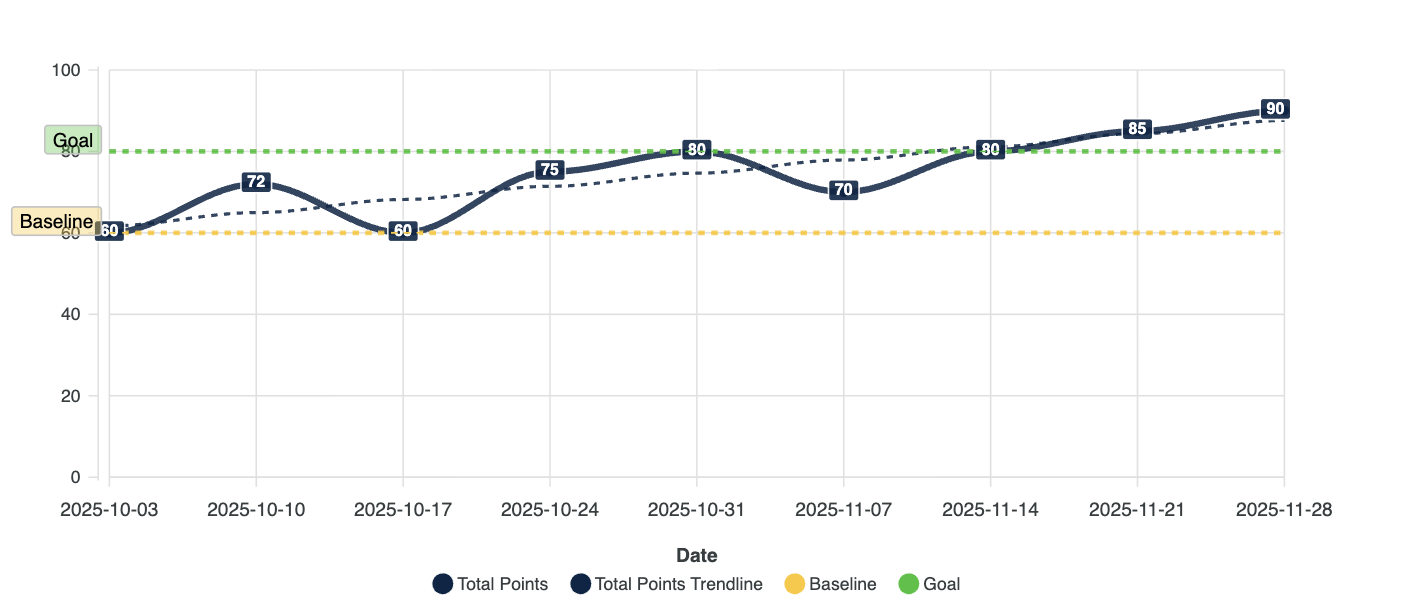
However, when measurement methods change or data is collected randomly, the graph may still look clean. Unfortunately, the story underneath it becomes unclear.
As a result, teams may feel confident in data that is not actually reliable.
A weekly system that works in real schools
Fortunately, an effective system does not need to be complicated.
In fact, the most successful systems are simple enough to survive busy schedules, staff absences, and inevitable changes throughout the school year.
Step 1: Pick one measurement method and lock it in
Before collecting data, the team should be able to clearly answer the following questions:
- What is being measured
- How it is measured
- What counts as a data point
- What each score represents
For example, if one teacher uses percentages while another uses a rubric, the data immediately becomes difficult to compare.
Therefore, the measurement method should be written directly into the goal and kept consistent over time.
Step 2: Choose one data collection day per week
Next, select one predictable day for data collection, such as every Friday or every Wednesday.
Because this day is consistent, teachers can plan ahead and administrators can better understand the data they are reviewing.
Meanwhile, if a student is absent, data should be collected on the next school day rather than skipping the week entirely.
Step 3: Collect fewer points, but collect them consistently
Although it may feel helpful to collect large amounts of data at once, consistency matters more than volume.
For example, one strong data point each week over ten weeks tells a clearer story than scattered data collected in bursts.
As a result, consistent weekly data creates a trend that teams can actually trust.
Step 4: Review the graph weekly for one minute
At this point, the most important habit begins.
Each week, take sixty seconds to ask:
- Is the student improving?
- Is the data being collected the same way each time?
- If the teacher changed tomorrow, would the next person understand this graph immediately?
If the answer to any of these questions is no, the system should be adjusted that week. Otherwise, the issue will resurface later during an IEP meeting.
What this system prevents
Because the structure is consistent, a weekly progress monitoring system prevents several common problems, including:
- missing weeks that break the progress story
- measurement methods changing without notice
- baselines being retyped or approximated
- graphs that appear acceptable but are not trustworthy
- progress monitoring becoming a last-minute task
Therefore, progress monitoring is not just about compliance.
Ultimately, it is about protection.
What administrators should look for
Administrators do not need perfect graphs.
Federal special education guidance emphasizes the importance of consistent progress monitoring over time.
Instead, they need dependable systems that function across classrooms.
Specifically, administrators should look for:
- a consistent schedule for data collection
- a clear measurement method written into the goal
- a baseline that remains stable over time
- graphs that update as data is entered
- brief notes explaining instructional changes
When these elements are in place, teams can respond earlier and with greater confidence.
A simple next step
If your current progress monitoring system feels like spreadsheets, scattered notes, or rebuilding graphs at the end of the quarter, you are not alone.
Because of these challenges, IEP Report was built by classroom teachers to make weekly progress monitoring simple and consistent.
If you want to see what this kind of weekly system looks like in practice, schedule a short demo and decide whether it fits your school.
👉 Visit iepreport.com and book a demo time that works for you.
Final thought
Good progress monitoring does not require perfection.
Instead, it requires consistency.
Ultimately, a simple weekly system helps teachers focus on instruction, helps teams make decisions earlier, and helps schools stand behind their data with confidence.
2 thoughts on “Progress Monitoring That Protects Teachers: A Simple Weekly System”