
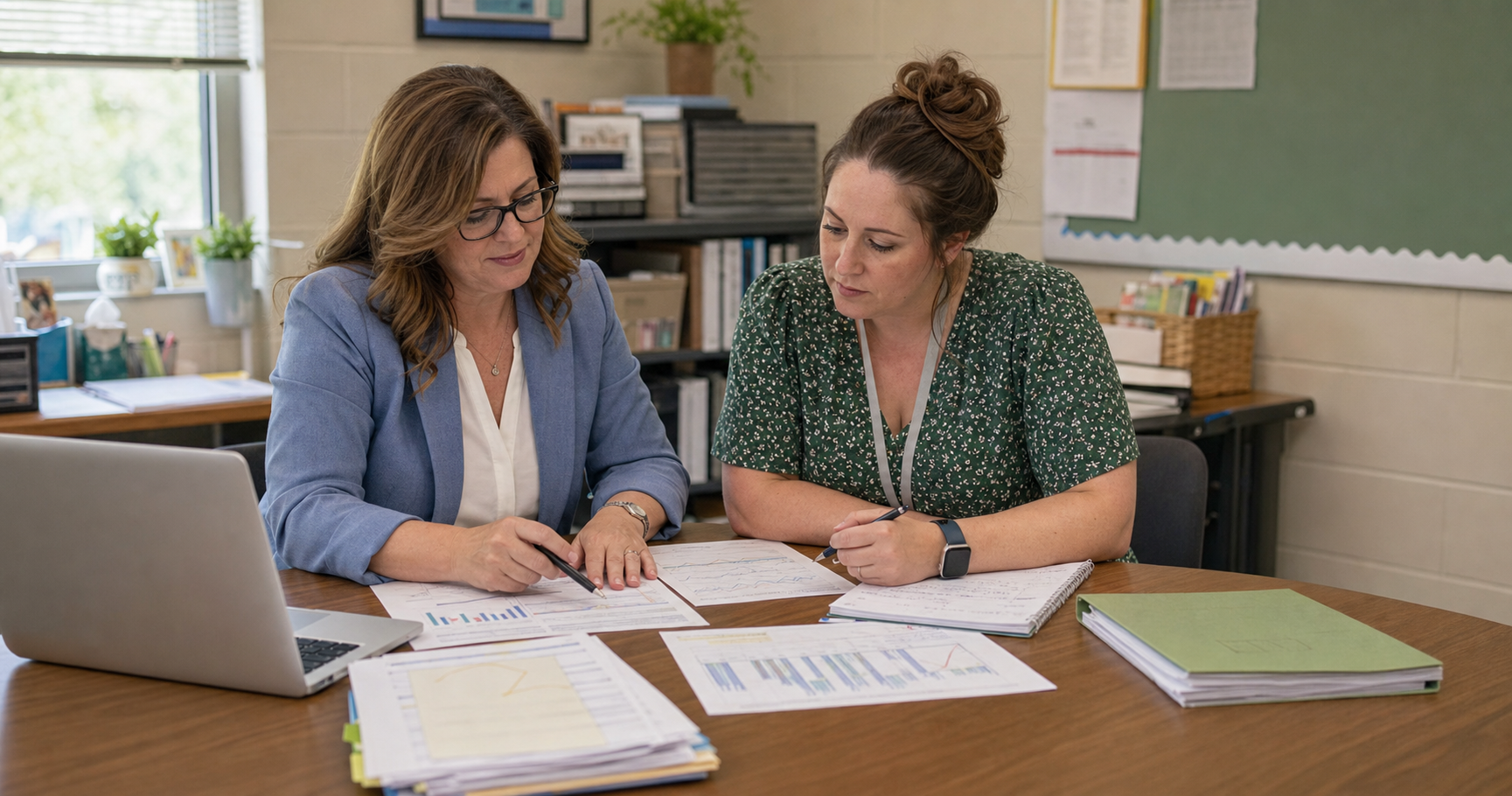
Summer IEP Progress Monitoring Handoff: What Should Carry Into Next Year
Summer IEP progress monitoring handoff work starts before staff leave for break. When school ends, IEP progress data can quietly scatter. One teacher has notes in a binder. Another has graphing files on a laptop. A related service provider has Summer IEP Progress Monitoring Handoff: What Should Carry Into Next Year
Summer IEP progress monitoring handoff work starts before staff leave for break. When school ends, IEP progress data can quietly scatter. One teacher has notes in a binder. Another has graphing files on a laptop. A related service provider has strong information, but it is not connected to the classroom record. By August, a new team may be trying to understand a student’s needs from incomplete notes. A summer IEP progress monitoring handoff helps school leaders protect that information before schedules change. It is the bridge between what the team learned this year and what next year’s team needs to know.
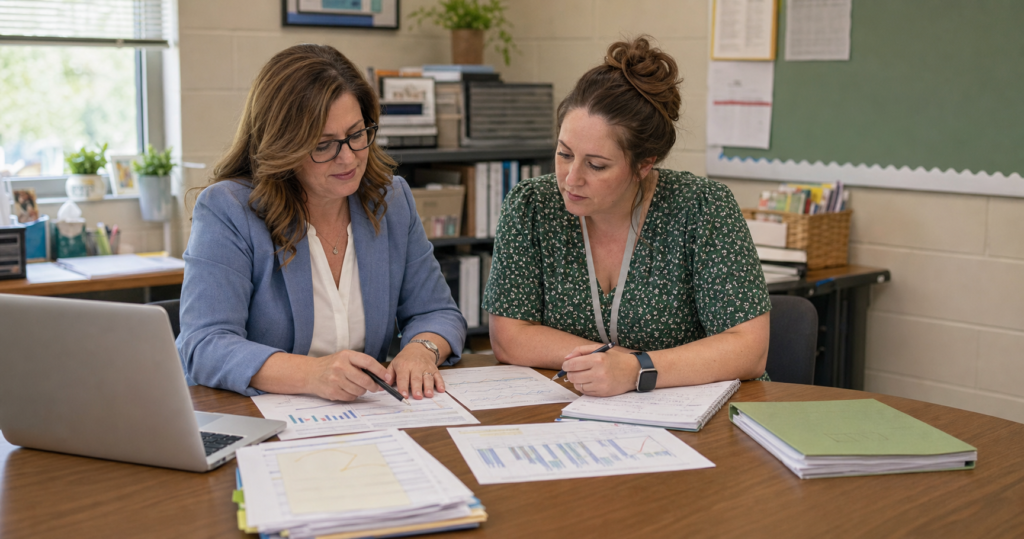
Summer IEP Progress Monitoring Handoff: What It Protects
A summer handoff protects continuity. The goal is to make sure the next team can see the student’s current performance, the measurement method, the trend in the data, and the instructional response that was already tried.
This matters because progress monitoring is not just a compliance task. It is the record of what changed over time.
Federal IDEA regulations say IEP teams must review the IEP periodically and revise it as appropriate to address lack of expected progress. The official IDEA regulation on IEP review and revision is a useful reminder that progress data should help teams make decisions.
What the Baseline Still Means After Summer Starts
The baseline is the anchor for the whole progress story.
By June, teams often focus on the final number. That makes sense, but the next team also needs to know where the student began.
The baseline also helps teams notice whether a goal was written clearly enough to monitor. A strong handoff includes the baseline, the most recent data point, and a note about what the change means. Teams that need a refresher can revisit how to write a baseline that actually works.
What the Final Metric Means in Practice
A final score does not always tell the full story.
A student may end the year at 75 percent accuracy on a writing goal. That number matters, but leaders also need to know whether the student maintained it across probes or needed heavy prompting.
The metric should answer practical questions:
- Did the student need adult support to show the skill?
- Was the same measurement method used all year?
- Did progress improve after instruction changed?
This is where the IEP data handoff becomes more than a file transfer. It gives the next team the interpretation behind the number.
How Progress Data Should Be Organized Before Staff Leave
A summer IEP progress monitoring handoff works best when schools keep the information simple and consistent.
Each goal should have one clear place where the next team can find the annual goal, baseline, measurement method, recent data, progress statement, and any important instructional notes. This makes the summer IEP progress monitoring handoff easier for teachers, service providers, and administrators to trust.
The handoff should also include students who are changing schools, moving programs, receiving related services, or receiving extended school year services. These transitions raise the risk that data will not travel with the student. IEP Report has written before about the silent problem of data that does not travel with the student.
When Teams Should Flag Instructional Concerns
The handoff should not only say what happened. It should flag what needs attention.
A concern may need to be flagged when a student made limited growth, had long gaps in data, required a different measurement method, or showed progress only after a specific support was added.
For example, if a student made little progress until the team added daily phonics intervention in March, that detail should travel with the student.
The point is not to make promises about what the next team must do. The point is to preserve evidence so the team can make informed decisions.
Why This Matters for School Leaders
For school leaders, a summer IEP progress monitoring handoff reduces avoidable risk.
Compliance risk increases when progress reports are vague, records are missing, or teams cannot explain how progress was measured.
Leadership visibility matters here. A director or principal does not need to micromanage every goal, but they should know whether a reliable handoff process exists.
Practical Implementation for Schools
A practical handoff can be short. Before staff leave, ask teams to complete a simple summer IEP progress monitoring handoff check:
- Current annual goals and baselines are easy to find.
- The most recent data point is entered.
- The progress statement matches the data.
- Any instructional change is briefly noted.
- Related service data is included when applicable.
- Students changing schools, programs, or providers are flagged.
Leaders can then review a small sample across buildings or grade levels. The purpose is to see whether the system is clear enough for the next team.
If schools are unsure how often data should be collected next year, this is a good time to revisit how often IEP progress should be monitored. A consistent schedule makes the fall handoff stronger.
Closing Reflection
Summer creates a natural pause, but student needs do not pause neatly.
The best handoffs do not require long reports. They require clear data, plain interpretation, and enough context for the next team to act wisely.
A summer IEP progress monitoring handoff is not about adding one more task to June. It is about making sure the work already done this year is not lost.
Frequently Asked Questions
What should be included in a summer IEP progress monitoring handoff?
A summer IEP progress monitoring handoff should include the annual goal, baseline, measurement method, recent data, progress statement, and any important instructional notes. It should also flag students who are changing schools, programs, providers, or receiving extended school year services.
Why does IEP progress data get lost over summer?
Data often gets lost because staff leave, schedules change, files are stored in different places, or related service records are separate from classroom records. A clear IEP data handoff reduces the need to rebuild the student’s progress story in August.
How can school leaders check whether handoffs are complete?
School leaders can sample a few student records across buildings, grade levels, or service areas. They should look for measurable baselines, current data, clear progress statements, and notes about instructional changes when progress was limited.