Introduction
In most schools, IEP progress monitoring still happens in pieces.
A teacher tracks data in one place. Another staff member uses a different system. Graphs are created later, if they are created at all. When it is time for a meeting, people pull everything together and hope it tells a clear story.
That gap creates real problems. Data becomes inconsistent. Progress is harder to explain. And when questions come up, teams spend more time searching than answering.
This is where IEP progress monitoring software changes things. It brings everything into one place so teams can actually see what is happening over time.
What IEP Progress Monitoring Software Actually Does
At its core, IEP progress monitoring software organizes how schools collect, store, and use student data.
Instead of scattered spreadsheets or paper notes, everything connects to the student’s goals. Each data point is tied to a specific skill, condition, and measurement method.
That means:
- Teachers enter data directly into the system
- Data is automatically stored with the correct goal
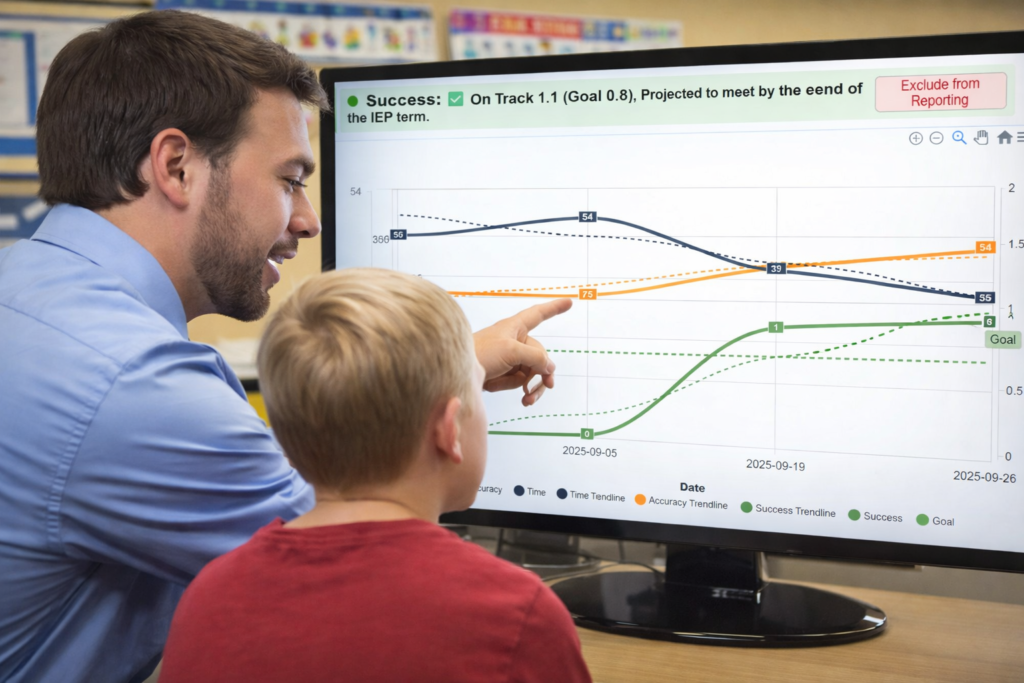
- Graphs update without manual work
- Teams can see trends without rebuilding reports
A strong IEP data tracking tool does not just collect scores. It connects data to instruction. It shows whether what we are doing is working.
This is similar to what you see in strong systems described in
<a href=”/what-does-good-iep-progress-monitoring-look-like”>what good IEP progress monitoring looks like</a>, where data is consistent, visible, and usable.
What the Baseline Means Inside a System
One of the biggest misunderstandings in schools is the role of the baseline.
In a good system, the baseline is not just a number written once in the IEP. It becomes the starting point for all future data.
When baseline data is entered into IEP progress monitoring software, it is used to:
- Anchor the graph
- Define expected growth
- Compare future performance against starting skill level
If the baseline is unclear or inconsistent, the entire system becomes unreliable.
That is why strong teams focus on building accurate baselines first, as explained in
How to Write a Baseline that Actually Works
Without that clarity, even the best software cannot fix the problem.
What the Data Actually Means in Practice
When teams look at a graph, the question is simple:
Is the student making meaningful progress?
But that answer depends on how data is collected and interpreted.
For example:
- A student moving from 40% to 60% may look like strong progress
- But if the goal is 90% by the end of the year, that growth may not be enough
- A flat trend line may indicate a need for instructional change
- A highly variable graph may show inconsistent data collection
A good IEP data tracking tool makes these patterns easier to see.
Instead of guessing, teams can:
- Identify upward trends
- Spot plateaus early
- Compare performance to expected growth
This aligns with federal guidance on progress monitoring, which emphasizes ongoing data review and instructional adjustment (U.S. Department of Education guidance on progress monitoring)
The key is not just having data. It is understanding what the data is saying.
How Progress Should Be Monitored
Consistent progress monitoring is what makes the system work.
In practice, this means:
- Data is collected regularly, not just before reporting periods
- The same method is used each time
- Scores are tied directly to the goal criteria
Many teams run into issues here, especially when systems break down over time, which is explained in the real reason IEP graphs break.
Strong systems make this easier by:
- Providing clear data entry points
- Organizing goals and measures in one place
- Automatically updating graphs after each entry
This removes the need for manual tracking and reduces errors.
As discussed in
How Often Should IEP Progress Be Monitored? (Simple Guide for Schools), consistency matters more than frequency alone.
Without consistency, data loses meaning quickly.
When Teams Should Adjust Instruction
Progress monitoring is not just about collecting data. It is about responding to it.
Teams should consider adjusting instruction when:
- Data shows little or no growth over time
- The student is not on track to meet the goal
- Performance is declining
- Progress is inconsistent despite stable instruction
With IEP progress monitoring software, these patterns become visible earlier.
Instead of waiting for a quarterly report, teams can:
- Identify concerns within weeks
- Adjust interventions sooner
- Document the changes clearly
This is where progress monitoring becomes actionable, not just procedural.
Why This Matters for School Leaders
For school leaders, this is not just about organization. It is about risk.
When data is inconsistent or incomplete:
- It becomes difficult to defend instructional decisions
- Documentation gaps appear in IEP implementation
- Teams cannot clearly explain student progress
A centralized IEP progress monitoring software system supports:
- Clear documentation of services and outcomes
- Consistent data across staff members
- Defensible records during audits or due process
From a district perspective, this reduces risk and improves clarity.
It ensures that when questions come up, the answer is already documented.
For many schools, using an IEP data tracking tool like this brings clarity to what was previously scattered.
Practical Implementation for Schools
Schools do not need to change everything at once.
A strong starting point includes:
- Identifying how data is currently collected
- Standardizing measurement methods across staff
- Ensuring baselines are accurate and usable
- Moving data collection into a single system
From there, teams can:
- Train staff on consistent entry
- Review data regularly
- Use graphs during team discussions
The goal is not complexity. It is clarity.
When systems are simple and consistent, they are more likely to be used correctly.
Closing Reflection
Most schools are already collecting data.
The challenge is not whether data exists. It is whether the data can be used.
When information is scattered, even strong teaching can look unclear. When data is organized and visible, progress becomes easier to understand and explain.
IEP progress monitoring software does not replace good instruction. It makes good instruction visible.
That visibility is what supports better decisions, clearer communication, and stronger outcomes for students.
Frequently Asked Questions
What is IEP progress monitoring software?
IEP progress monitoring software is a system that helps schools collect, store, and analyze student data tied to IEP goals. It allows teams to track progress over time and make instructional decisions based on that data.
How is it different from spreadsheets?
Spreadsheets store data, but they do not connect it to goals, update graphs automatically, or ensure consistency. Software systems are designed to organize and display progress in a way that supports decision-making.
Why does progress monitoring matter for compliance?
Progress monitoring provides documented evidence that instruction is being delivered and evaluated. Without consistent data, schools may struggle to demonstrate that they are meeting IEP requirements.